Start duck decoy rig troubleshooting with the symptom. A decoy that swings around a stationary anchor has a different problem from one moving steadily away, sitting nose-down or carrying a crossed line. Observe first, recover safely and inspect the complete rig. Adding weight is useful only when it addresses the cause.
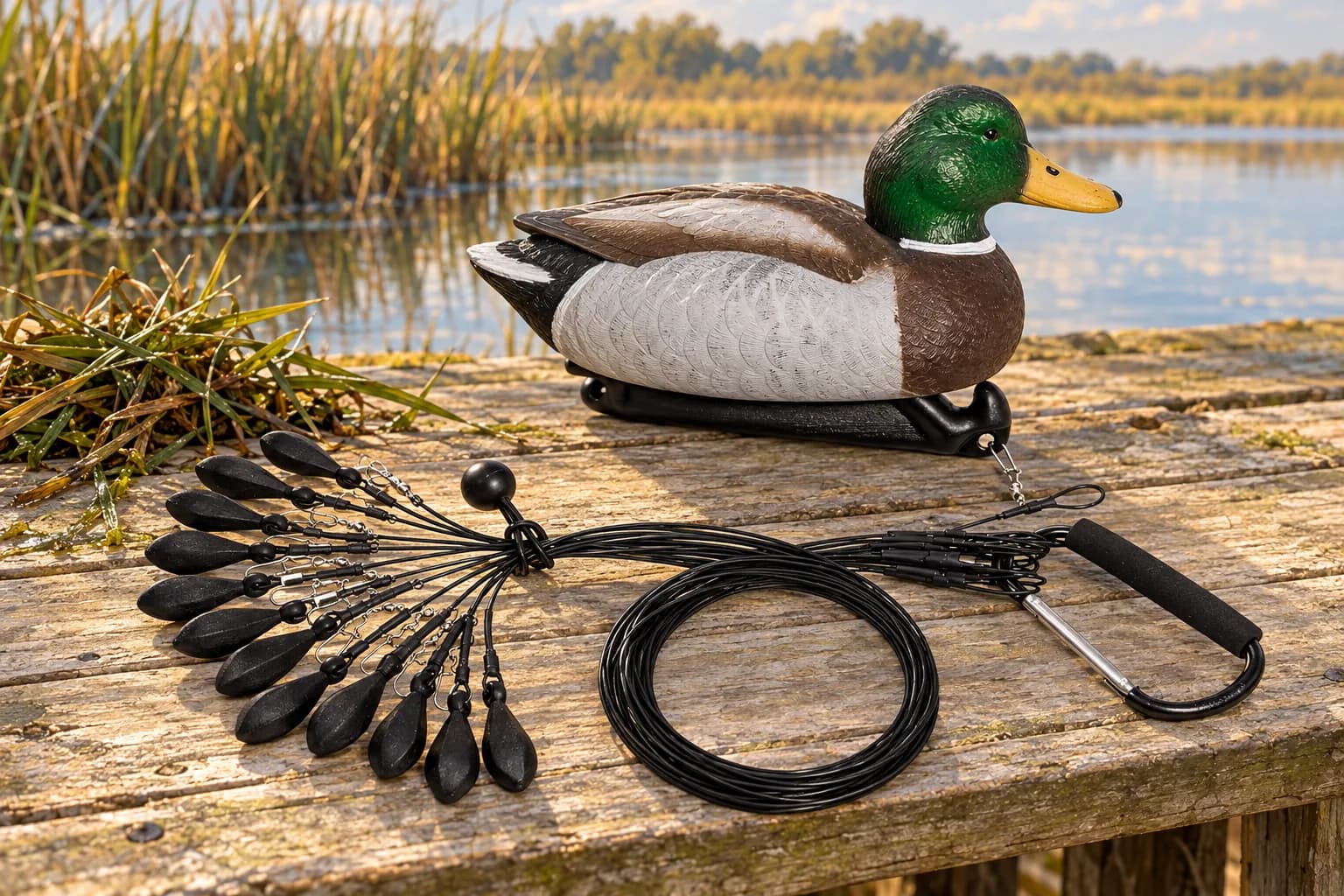
Lead image: AI-generated editorial illustration based on Lirben product photos. It is not a documented failure, field test or repair demonstration.
Match the symptom to the next check
The table gives inspection prompts, not a diagnosis made from shore. Local depth, bottom, water movement and the recovered equipment determine which explanation fits.
Decoy turns or swings within the same area
- What to inspect
- Whether the anchor remains in place and the decoy floats freely
- Useful next decision
- Continue observing if the rig is holding and has clear space
Decoy progressively leaves its original position
- What to inspect
- Anchor contact, usable reach and every connection
- Useful next decision
- Recover safely; separate an anchoring problem from a disconnected rig
Nose pulled low or body partly submerged
- What to inspect
- Taut line, snag, attachment route and the decoy body
- Useful next decision
- Correct the reach or obstruction; investigate the body if it still sits poorly
Decoy leans or will not settle normally
- What to inspect
- Crossed line, caught hardware, keel and body condition
- Useful next decision
- Clear the connection and check the maker's body or ballast instructions
Lines cross between neighboring decoys
- What to inspect
- Slack, sweep, mixed systems and layout
- Useful next decision
- Separate safely and revise the affected spacing or line arrangement
Vegetation or debris collects on a rig
- What to inspect
- Anchor, connector, line and changed water conditions
- Useful next decision
- Clear on recovery and reconsider the placement if fouling repeats
A clip opens, sleeve moves or cable is damaged
- What to inspect
- The affected assembly and decoy eyelet
- Useful next decision
- Remove it from use; replace or follow the approved support/repair route
Several decoys on one longline move together
- What to inspect
- The shared main line and anchoring arrangement
- Useful next decision
- Inspect that complete system rather than changing one neighboring individual anchor
| Feature | What to inspect | Useful next decision |
|---|---|---|
| Decoy turns or swings within the same area | Whether the anchor remains in place and the decoy floats freely | Continue observing if the rig is holding and has clear space |
| Decoy progressively leaves its original position | Anchor contact, usable reach and every connection | Recover safely; separate an anchoring problem from a disconnected rig |
| Nose pulled low or body partly submerged | Taut line, snag, attachment route and the decoy body | Correct the reach or obstruction; investigate the body if it still sits poorly |
| Decoy leans or will not settle normally | Crossed line, caught hardware, keel and body condition | Clear the connection and check the maker's body or ballast instructions |
| Lines cross between neighboring decoys | Slack, sweep, mixed systems and layout | Separate safely and revise the affected spacing or line arrangement |
| Vegetation or debris collects on a rig | Anchor, connector, line and changed water conditions | Clear on recovery and reconsider the placement if fouling repeats |
| A clip opens, sleeve moves or cable is damaged | The affected assembly and decoy eyelet | Remove it from use; replace or follow the approved support/repair route |
| Several decoys on one longline move together | The shared main line and anchoring arrangement | Inspect that complete system rather than changing one neighboring individual anchor |
Use a repeatable inspection sequence
Step 1
Describe what is actually happening
Distinguish a stable swing from progressive drift, a pulled-low body or a caught line.
Watch against a fixed shoreline reference. Note whether the decoy stays within an area or continually relocates. Look at its floating posture and whether one rig behaves differently from nearby rigs. Record what changed, such as a wind shift, rising water or new debris.
Do not assume that visible movement means failure. A holding anchor still allows movement within the line's reach. A floating body moving around that point differs from the whole rig dragging away.
Step 2
Recover and trace the whole rig
When safe, inspect the anchor, line, connections, attachment and decoy instead of guessing from one part.
Recover the affected equipment only when the route and water permit it. Trace the rig from the anchor through the line and fittings to the keel or eyelet. Look for a missing connection, trapped vegetation, crossed line, cut coating, sharp kink, displaced sleeve or a snap that has not closed.
Inspect the decoy as well. Check its intended attachment, keel, visible seams and any maker-specified plug or ballast arrangement. A sound anchor cannot correct a damaged body. Keep suspect rigs and decoys separate from the working group.
Step 3
Correct the cause and reassess
Choose a suitable response to the observed problem, then check the changed setup before redeploying the spread.
Change the part of the setup that the inspection identifies. Inadequate reach calls for a suitable longer rig or shallower placement. A fouled connector needs clearing and a sound connection. An anchor that moves with adequate reach may need a different anchor, bottom contact or location.
Recheck the changed setup before adding more decoys. If you cannot identify the cause or establish a sound connection, leave the affected equipment out and seek the maker's help. A quick pull by hand does not prove a repair's strength.
For boating or cold-water recovery, North Dakota Game and Fish's hunter boating guidance covers preparation and flotation. Do not chase a drifting decoy or enter unfamiliar water to complete an equipment diagnosis.
When a decoy drifts
First check whether the anchor is still connected. Then check whether the usable line can reach bottom without pulling tight at that placement. If those are sound, evaluate actual anchor contact, bottom and exposure.
Use windy-water diagnosis for gusts and exposure or river anchoring checks for flow and debris. Those pages cover conditions in depth. The general anchor-size guide and anchor-shape comparison help when the anchoring choice itself needs to change.
A heavier anchor on an independent upstream or upwind decoy does not hold the decoy beside it. Each individual rig must suit its own placement. A shared longline is a different arrangement with its own anchors and main line.
When a decoy sits low or tilts
Look for line tension, a snag, crossed connections or hardware wedged against the keel. The line-length guide explains why a nominal length equal to water depth can be inadequate. A 48-inch line is not a four-foot working-depth rating.
Once recovered, inspect the attachment path using the keel and connector guide. If the rig is clear but the decoy continues to sit poorly, follow the decoy maker's checks for body damage, water entry or ballast. Do not add an anchor simply to force a damaged or unsuitable body upright.
Avian-X's official rigging FAQ treats depth, wind and current as separate factors and asks owners to identify the product model when seeking support. Use the instructions for the actual floating decoy, especially when assessing a leak, plug or ballast problem.
When lines tangle or collect weeds
Separate a crossing while you still control each rig. During pickup, recover one decoy and its anchor before adding it to a bundle. Keep different lengths and systems organized. The storage and transport guide covers grouping, carrying loops and protecting cable.
On the water, look at how far each decoy can sweep and whether that area crosses another line. Repeated crossing may require a revised spread layout, suitable length or separation of a moving group. A jerk rig needs clear space through its whole pull and return, not merely where the decoys rest.
Debris can change a rig that worked earlier. Recover and clear it safely, then decide whether the same location will foul again. A fixed or sliding part also needs to be evaluated according to its actual design; use the fixed-versus-sliding guide rather than forcing an unknown fitting to move.
When to replace equipment or contact support
Set aside exposed or broken strands, a moved sleeve, damaged latch, cracked eyelet or questionable repair. The line and hardware guide covers compatibility. The maintenance checklist helps keep rejected equipment out of the next trip.
For support, provide the exact rig and decoy model, purchase details, clear photos and where the problem occurs along the assembly. Describe what you saw without guessing a load or wind rating. Keep the affected parts available rather than cutting them apart before the maker can assess them.
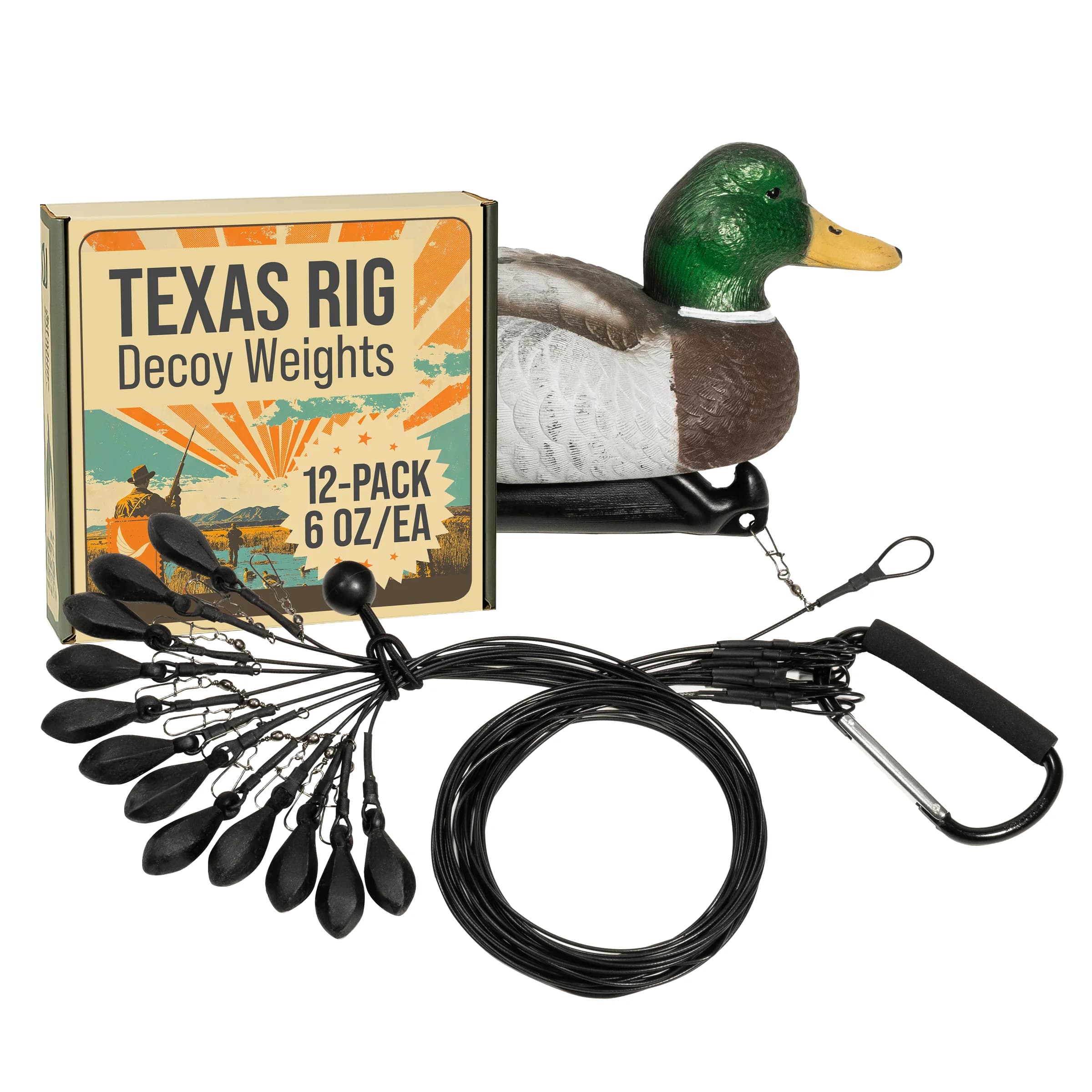
For an affected Lirben 6 oz kit, contact Lirben support. Its 12 individual 48-inch cable rigs have fixed specifications. Buying another pack of the same dimensions does not correct a depth or system mismatch.
Common questions
Do tangle-free rigs need any organization?
Yes. Loops can cross and anchors can pass through other lines. Tangle resistance does not remove the need for controlled pickup, separate groups and a clear transport arrangement.
Will cutting excess line solve a crossing problem?
Inspect the cause first. Cutting a finished cable changes both reach and connections. If it barely reaches bottom already, shortening it creates another problem. Use a suitable complete rig or an approved modification procedure.
Can I troubleshoot by changing everything at once?
It is harder to tell which change mattered. When conditions allow, correct the identified problem and observe the result. End the setup when the water or recovery route no longer permits a controlled check.
Sources and limits
This guide combines the linked agency and maker guidance with a component-inspection checklist. Ducks Unlimited's rigging overview explains why line, anchors and connections belong to the complete system. The table does not report a field trial or certify an unseen fault, repair, holding power or safe recovery route.
For your next setup
Lirben Texas Rig Decoy Weights - 6 oz (12-Pack)
Twelve individual rigs. Choose the fit for your water.