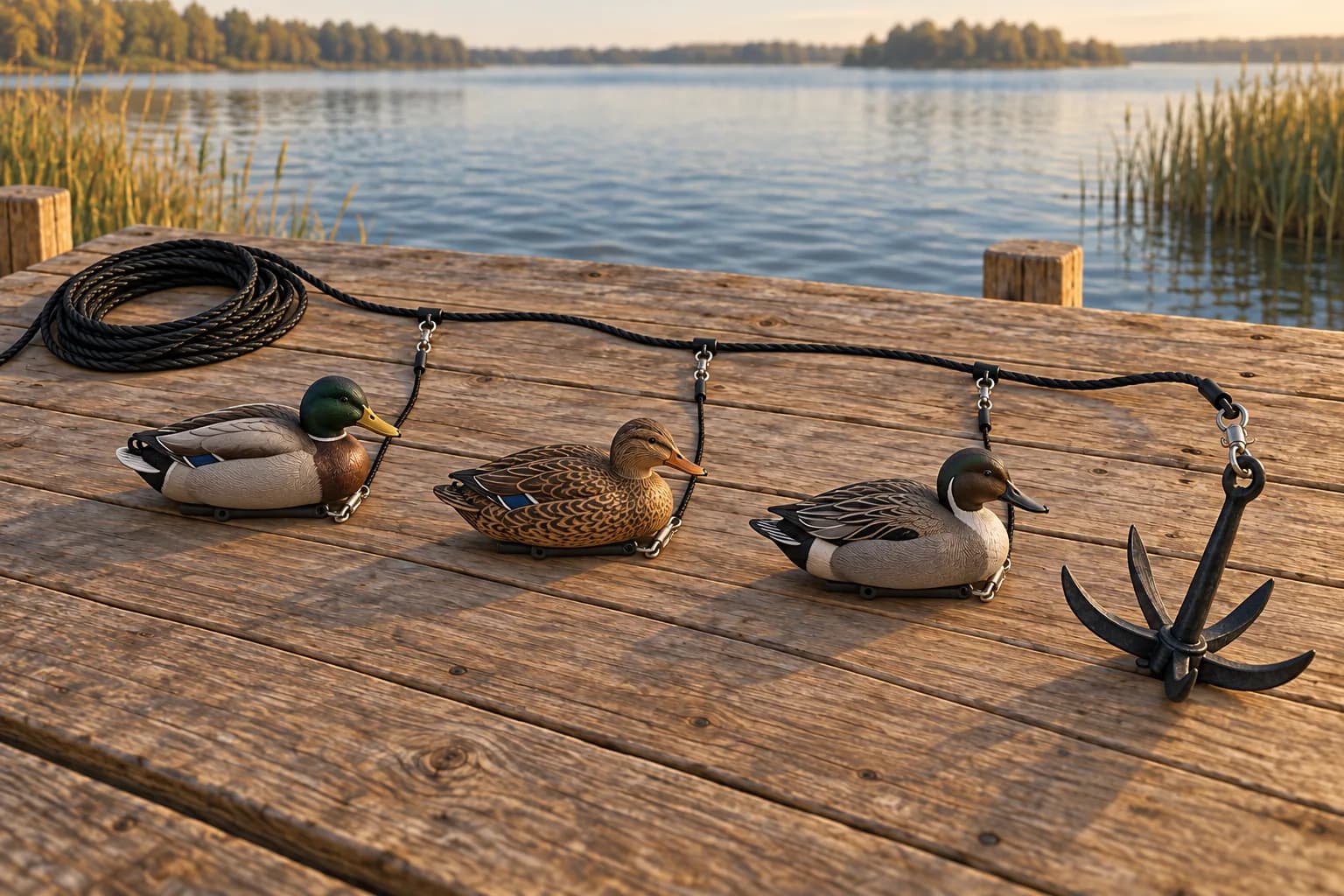
A duck decoy longline, also called a gang rig, connects several decoys by short drops to a shared main line, sometimes called a mother line. Rig it as one complete system with suitable anchors, matched connections and a planned pickup route. Choose the arrangement for the water and handling method.
Lead image: AI-generated editorial illustration. The shared-line equipment is an example of a different rigging system, not a Lirben product or a scale assembly diagram.
What is different about a longline?
An individual rig connects one decoy to its own anchor. A longline organizes multiple decoys around a shared line. Ducks Unlimited's rigging overview describes a main line with short decoy leaders and notes its use in deep, open water, especially for diving-duck spreads.
The complete arrangement still needs suitable anchoring and usable reach. A main line does not guarantee a hold in every bottom or current. Designs also differ. Some use a particular end-anchor arrangement or dedicated line-handling equipment. Read the instructions for the system you actually have.
If you are deciding whether to switch at all, start with the Texas rig, wrap rig and longline comparison. This guide covers planning, setting and recovering a shared line after that choice.
Know the parts before buying them
Main line
- Function
- Carries the decoy connections across the set
- Check before assembly
- Material, finished length and the maker's handling method
Decoy drops or leaders
- Function
- Join individual decoys to the main line
- Check before assembly
- Compatible length, fittings and keel attachment
Main-line clips
- Function
- Attach each drop to the shared line
- Check before assembly
- Correct size, closure and fit on that main line
End lines and anchors
- Function
- Position and hold the complete system
- Check before assembly
- The required arrangement for depth, bottom and conditions
Storage system
- Function
- Controls recovered main line and drops
- Check before assembly
- Whether the design stores decoys attached or disconnected
| Feature | Function | Check before assembly |
|---|---|---|
| Main line | Carries the decoy connections across the set | Material, finished length and the maker's handling method |
| Decoy drops or leaders | Join individual decoys to the main line | Compatible length, fittings and keel attachment |
| Main-line clips | Attach each drop to the shared line | Correct size, closure and fit on that main line |
| End lines and anchors | Position and hold the complete system | The required arrangement for depth, bottom and conditions |
| Storage system | Controls recovered main line and drops | Whether the design stores decoys attached or disconnected |
A drop is the connection between a decoy and the main line. It is not the entire depth allowance for an end anchor. Plan the anchor lines and decoy connections according to the design rather than choosing every line from one depth multiplier. The line-length guide explains the difference between nominal length and usable reach.
Plan and set the longline
Step 1
Plan the line and recovery route
Choose the placement, depth range and a deployment and recovery route before loading the system.
Choose where the set will lie and how you will approach both ends for recovery. Check intended depths, bottom conditions, expected water-level changes and the available working area. Leave out a line you cannot retrieve with your access and equipment.
Sketch the shared line on your spread plan. Account for independent decoys, other lines, the boat's route and any dog working through the water. A visible surface arrangement does not show every line beneath it. Keep recovery paths out of the line system.
Step 2
Stage a complete matched system
Lay out the main line, drops, compatible clips and anchors in the order the maker specifies.
Practice on land in daylight. Inspect the main line, every drop, anchor connection and decoy eyelet. Work each clip, then lay the parts out in deployment order. Confirm whether your system calls for decoys to be attached during staging or added as the line pays out.
Keep the two ends identifiable where the design has two ends to anchor. Put anchors and loose fittings where they can be handled deliberately. A pile of line under other equipment is a problem to solve before leaving the access point.
Step 3
Deploy in a controlled order
Follow the system's anchor and line sequence while keeping loose line clear of people and equipment.
Follow the maker's sequence for the first anchor, paying out the line, connecting drops and completing the anchoring. Keep loose line out of feet, clothing, controls and propulsion equipment. Coordinate who handles the line and who controls the boat; do not begin until those jobs can be managed safely.
Stop when a drop crosses the main line or a clip fails to close. Correct it while you still control that section. Do not continue feeding a known tangle into the water and expect the anchors to straighten it later.
HEYDAY's gang-rig instructions provide one maker's example: place its first anchor, pay out the main line while adding decoy drops, then place its second anchor. That example explains the order of operations. Its particular anchor design and connections do not specify a different manufacturer's system.
Step 4
Check the whole set
Check float posture, line clearance, anchor hold and the route needed to recover every part.
Watch the complete line after it settles. Confirm that the decoys float normally, connections remain clear and the set does not progressively relocate. Check whether any turn, crossing or tight section has changed the planned arrangement.
Reassess when flow, wind, debris or water level changes. If several birds on one line move together, inspect that shared system. A separate individual anchor beside it cannot secure the main line.
Use river and current checks or wind-exposure checks to assess the condition you actually have. Neither guide assigns a universal anchor weight or current rating.
Step 5
Recover and separate the line
Control each recovered anchor, drop and section of main line so it stays clear and ready for storage.
Use the recovery route you planned. Bring each section under control and stow it by the system's method before it can wrap around someone or fall back into the water. If drops are designed to disconnect, separate them deliberately. If decoys remain attached, maintain their order without throwing a loose main-line pile over them.
Recover anchors with suitable equipment and a stable position. Stop if the route or conditions exceed the plan. Afterward, remove debris, inspect the connections and keep damaged parts out of the next working set.
North Dakota Game and Fish's boating guidance for hunters covers weather, flotation and cold-water preparation. An equipment checklist does not replace those decisions. Do not enter unfamiliar deep water to free a snagged line.
How far apart should drops be?
Use the system's supported arrangement and leave room for its decoys and leaders to work without crossing. Body size, leader reach, line movement and the intended pattern affect the space you need. A published spacing example for another kit is not a universal dimension.
Test the handling sequence with a manageable number before extending the set. If two drops repeatedly cross, inspect their reach, connection path and placement on the main line. Adding more birds makes that existing problem harder to handle.
Can you mix longlines with Texas rigs?
Separate groups can serve different placements. A longline may organize an open-water group while individual rigs allow independent positions elsewhere. Keep their working lines and recovery routes clear of each other. Use the decoy-count guide to choose a manageable spread rather than filling every available clip.
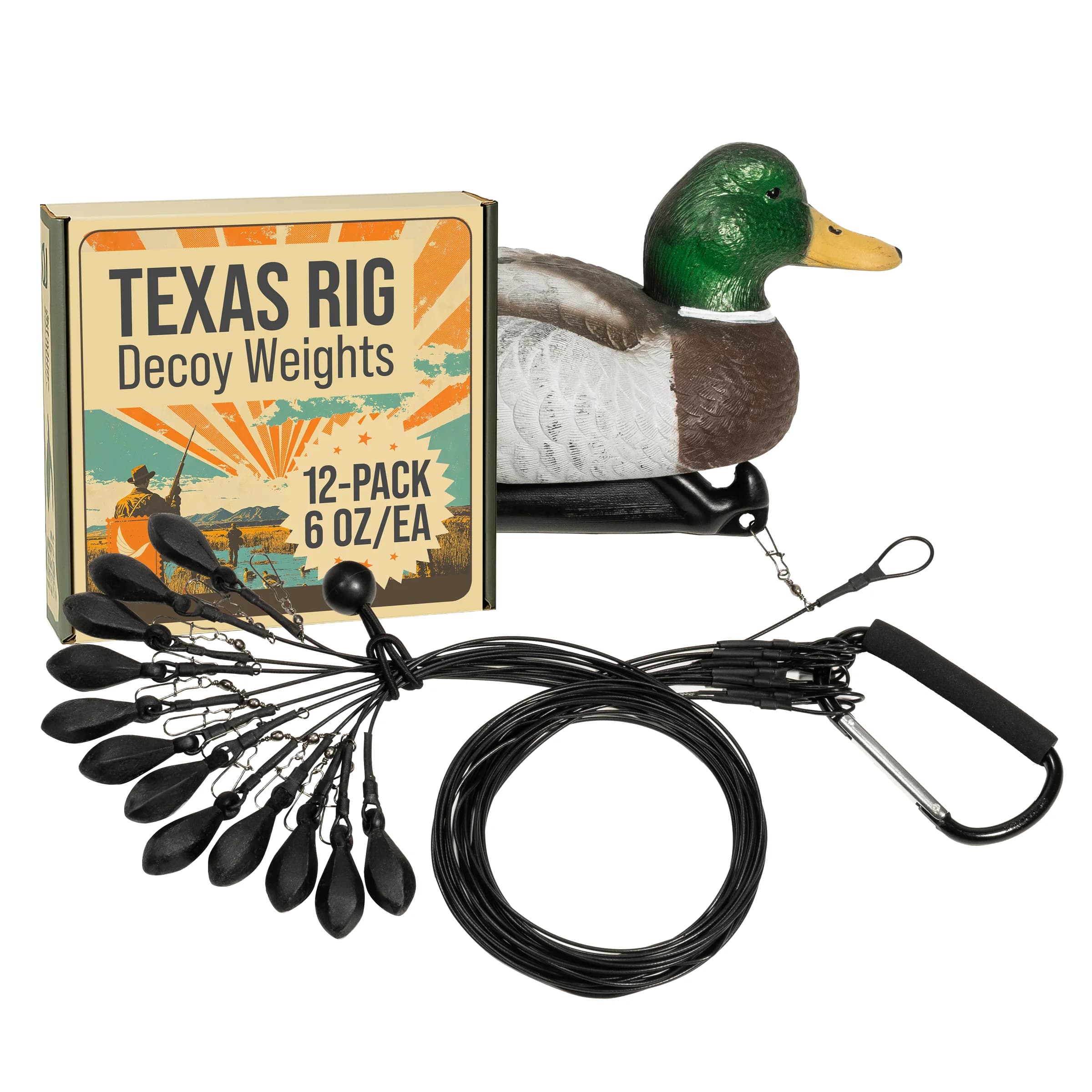
The Lirben 6 oz, 48-inch 12-pack is an individual shallow-water system. It does not include a longline main line, drops or shared-line end anchors. Consider it for separate placements only when its specifications suit those spots. Lirben does not currently sell a gang-rig kit.
Common questions
Does a longer drop make a main line suitable for any depth?
No. The whole design includes the main line, anchor arrangement, reach and recovery method. Choose a complete system for the intended water rather than extending a single component by guesswork.
Can I make a longline by clipping individual carrying loops together?
Do not assume those loops and connectors are designed for that purpose. A carrying connector does not establish a main-line system's suitability. Use compatible components and the system maker's design.
What should I do if a decoy pulls low or the line drifts?
Recover it safely and use the rig troubleshooting guide. Distinguish a tight connection or obstructed drop from an anchor system that is moving. More anchor weight does not correct every failure.
Sources and limits
The linked Ducks Unlimited overview supports the system definition. HEYDAY supplies an attributed deployment example; its product claims are not comparative test results. The remaining checklist organizes preparation and observation. It does not establish anchor masses, line ratings, water-depth guarantees or a measured time saving.
For your next setup
Lirben Texas Rig Decoy Weights - 6 oz (12-Pack)
Twelve individual rigs. Choose the fit for your water.