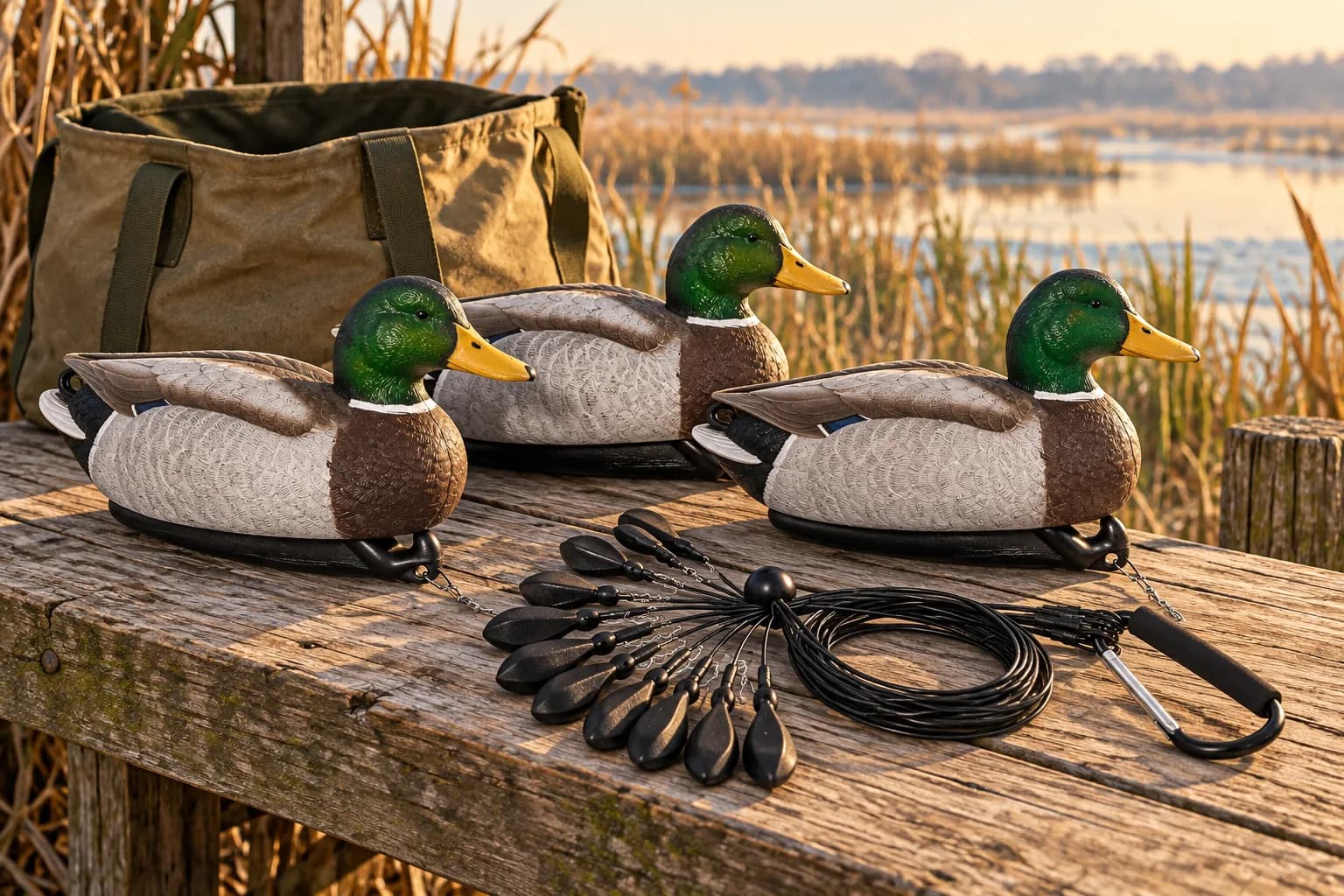
There is no single correct number of duck decoys. For a small portable setup, six or twelve floaters can be a practical planning example; a larger load must earn its place through usable water, transport and recovery. Choose the count you can arrange and manage, then match the rigs to those decoys. A dozen is a kit quantity, not a universal optimum.
Lead image: AI-generated editorial illustration based on Lirben product photos. Depicted equipment is illustrative; refer to the listing for supplied contents.
Choose a count for the water and the trip
Ducks Unlimited's Decoy Basics recommends starting small and learning what suits your needs. Its Building a Decoy Spread identifies water type, transport, budget and other hunters as factors in quantity. Individual authors' preferred counts are examples, not personal carrying limits or guarantees for your location.
Step 1
Choose the count for this outing
Start with the usable water, access and full load rather than the number of decoys you own.
Decide which part of the water you can actually set and retrieve from. Leave the landing space open, then see how many decoys fit into useful groups around it. Reduce the load if the extra birds would mainly fill that opening, overload the carry method or extend beyond suitable rig reach.
| Outing constraint | Decision it should influence |
|---|---|
| A short walk to a confined pond | A compact group that leaves clear water and can be recovered in one manageable outing |
| A long or difficult walk | Full carried mass, bag bulk and the return trip before adding another dozen |
| A kayak launch | Manufacturer capacity guidance, stability, usable deck space and contained lines |
| Larger open water | Visibility and layout, alongside an appropriate rig system and recovery method |
| Mixed floating decoy sizes | Attachment and anchor suitability for each body, not just total bird count |
Use the spread-layout guide for placement. This page answers quantity and purchasing arithmetic; adding another twelve is not a substitute for a workable arrangement.
One individual rig per decoy
An independently anchored floating decoy needs its own complete rig. Six individual anchors do not become twelve because two decoys share the same carrying clip. A longline is a different system with droppers and shared main-line anchors; its parts should not be counted as individual Texas rigs.
Step 2
Count working individual rigs
Allow one complete individual anchor rig per floating decoy and separate serviceable spares from damaged gear.
Lay out the intended decoys and count the sound, compatible rigs already available. Set damaged or questionable assemblies aside. Purchase for the remaining shortage, then decide separately whether to take the unused serviceable rigs as spares.
If you start with no rigs, the following calculations apply to a 12-pack of individual 6 oz anchors. They are arithmetic examples, not recommended spread sizes.
| Decoys independently rigged | 12-packs needed | Unused rigs from those packs | Anchor-only mass in use |
|---|---|---|---|
| 6 | 1 | 6 | 2.25 lb |
| 12 | 1 | 0 | 4.5 lb |
| 18 | 2 | 6 | 6.75 lb |
| 24 | 2 | 0 | 9 lb |
| 36 | 3 | 0 | 13.5 lb |
Multiply the deployed decoy count by 6 oz, then divide by 16 for pounds. To calculate packs, first subtract serviceable rigs you already own from the number needed, then round the remaining shortage up to a complete 12-pack. For example, eighteen decoys with twelve suitable existing rigs leave a six-rig shortage, requiring one additional pack and leaving six unused rigs.
Anchor weight is only part of the load
Step 3
Check the complete carried load
Add decoys, lines, hardware, bags and other equipment to the anchor-only calculation before deciding what to bring.
Weigh the actual packed bag or load. Include decoy bodies, cable, hardware, carrying accessories, bags and the rest of the equipment you will carry. Add any spare rigs you intend to bring. Plan for the return when gear can be wet, muddy or less neatly arranged.
The table does not establish a total Lirben kit weight or a safe human carrying limit. It isolates the known anchor mass so that one part of the plan is transparent. Our walk-in load guide turns that number into a route and carry plan; the kayak setup guide covers a different transport constraint.
Heavier individual anchors change this arithmetic. Twelve 4 oz anchors total 3 lb; twelve 8 oz anchors total 6 lb. Those are comparison examples, not additional Lirben variants or proof that one size will hold in a given wind. The weight-selection guide covers the complete decision.
When should you bring more or fewer?
Bring more only when they have a role in the layout and the transport plan still works. Keep fewer when they let you preserve open water, work within suitable line reach or manage the full trip more reliably. Adding visibility on larger water can also mean reconsidering decoy size or rig system rather than automatically multiplying individual rigs.
Season and hunting pressure can change the arrangement you observe, but neither provides a universal formula. Record what you changed and why before buying a larger spread. A smaller group placed in the intended area and recovered without losing gear is a useful operational outcome even when it does not predict how birds will respond.
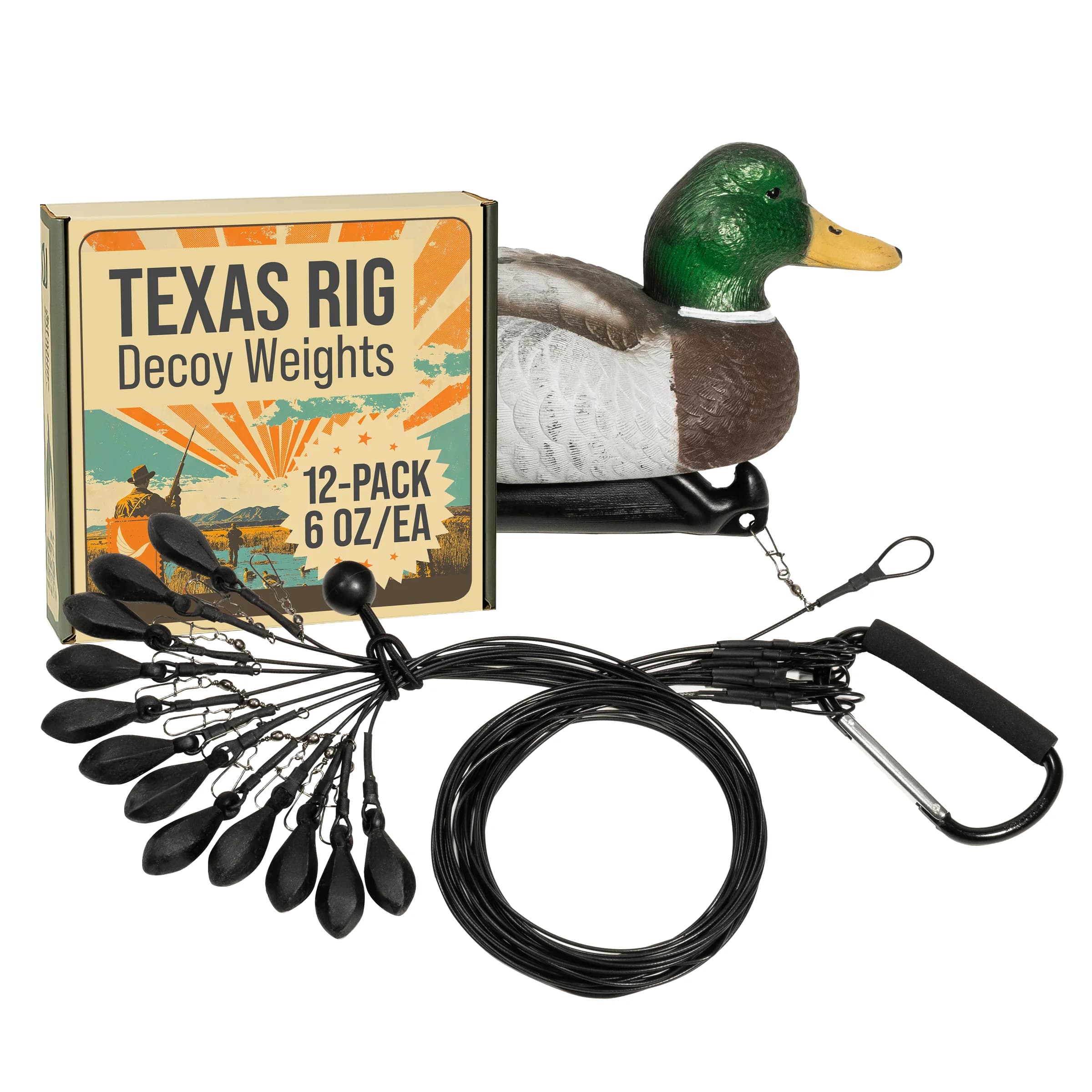
The Lirben 6 oz 12-pack supplies twelve finished 48-inch nominal cable rigs and carrying accessories. It does not include decoys. Check attachment compatibility, working depth and the actual placement before treating a pack count as a complete setup plan.
For your next setup
Lirben Texas Rig Decoy Weights - 6 oz (12-Pack)
Twelve individual rigs. Choose the fit for your water.