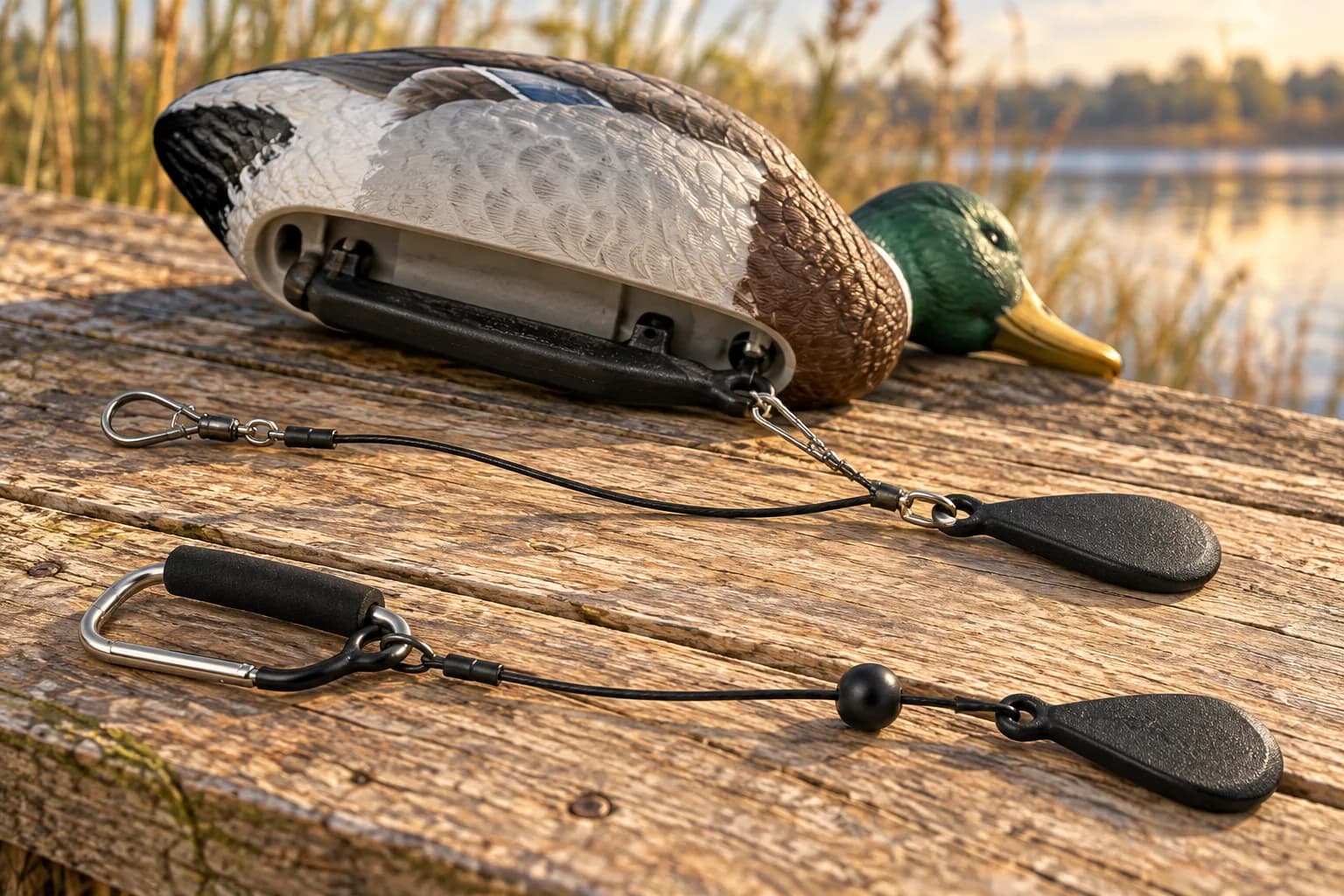
Fixed and sliding Texas rigs differ in which part moves along the line. Some designs have a sliding weight; others have a fixed weight with a moving decoy connection. Identify the actual anchor, line path, connector and stops. Fixed line length is a separate fact and does not tell you which component slides.
Lead image: AI-generated illustration of mechanism examples. It is not a scale assembly diagram or a declaration of the Lirben kit's exact moving arrangement.
Fixed what, and sliding where?
The word fixed needs a named part. A weight can be fixed at one end while the decoy connector travels on the line. A different design may let the anchor move while a terminal connection stays fixed. A swivel's rotation is another kind of movement altogether.
Fixed weight
- What the phrase describes
- An anchor secured at a particular point in that design
- What it does not establish
- That the decoy connection is also fixed
Sliding weight
- What the phrase describes
- An anchor intended to travel along its line path
- What it does not establish
- Unlimited travel, universal depth or freedom from every snag
Sliding decoy connection
- What the phrase describes
- The decoy fitting moves along the line in the intended design
- What it does not establish
- That the anchor is also sliding
Fixed line length
- What the phrase describes
- The rig has a stated finished or nominal length
- What it does not establish
- Which component moves, or the maximum suitable water depth
Rotating swivel
- What the phrase describes
- A fitting rotates at a connection
- What it does not establish
- That the fitting travels along the cable
| Feature | What the phrase describes | What it does not establish |
|---|---|---|
| Fixed weight | An anchor secured at a particular point in that design | That the decoy connection is also fixed |
| Sliding weight | An anchor intended to travel along its line path | Unlimited travel, universal depth or freedom from every snag |
| Sliding decoy connection | The decoy fitting moves along the line in the intended design | That the anchor is also sliding |
| Fixed line length | The rig has a stated finished or nominal length | Which component moves, or the maximum suitable water depth |
| Rotating swivel | A fitting rotates at a connection | That the fitting travels along the cable |
This is why a question such as "does the rig slide?" is incomplete. Name the part and follow its path. The hardware guide identifies clips, swivels, sleeves, loops and stoppers by their jobs.
Two published examples explain the difference
Ducks Unlimited's rigging overview describes a Texas rig with a sliding sinker. HEYDAY's FAQ describes its contrasting design with a fixed weight and a sliding decoy swivel clip.
Those sources establish that both arrangements exist. They do not make the label a universal specification. HEYDAY's statements about its own handling or performance also do not establish a comparative test result for every rig or an instruction for another manufacturer's components.
How to identify the mechanism you have
Step 1
Trace the complete rig
Identify the anchor, decoy connection, loops and any stops before testing a moving part.
Lay one unloaded rig on a clear surface with the anchor and decoy supported. Trace the line from end to end. Identify where it is secured, whether it passes through the anchor or a connector, and where loops, sleeves or stops limit travel.
Keep the large carrying carabiner separate from the small decoy attachment. A loop that gathers on a clip does not by itself explain how the weight moves. If the line path is hidden or unclear, identify the model and consult its instructions before pulling parts through it.
Step 2
Identify the intended movement
Use the actual design to distinguish a fixed fitting from an anchor or decoy connection intended to travel.
Compare the assembly with the maker's description. Identify the part intended to travel and the endpoints of that travel. Also identify what is deliberately secured. A sleeve that fixes a loop is not a slider to free up.
Do not remove a stopper because it appears to restrict movement. It may be part of the design. Likewise, a fixed anchor connection is not seized merely because the weight will not move along the line.
Step 3
Check without forcing the assembly
Check only the intended travel, closure and rotation while the parts are unloaded and supported.
Check the named moving part gently through the travel described by the maker, with the assembly unloaded. Look for debris, a caught fitting, damaged coating or a sharp kink that obstructs that path. Check snap closure and swivel rotation separately.
Stop if a part binds or the intended path cannot be established. Forcing a connector over a crimp, dragging an anchor through a damaged section or prying a fixed fitting loose can change the assembly. Isolate the rig for a compatible replacement or support check.
This bench check identifies obvious fit or movement problems. It is not a load test or a certification of connection strength. Use the maintenance guide when inspecting the line and hardware for serviceability.
Step 4
Evaluate the complete handling routine
Consider attachment, usable reach, pickup and storage rather than choosing a design from the fixed or sliding label alone.
Handle the complete rig as you would for attachment, pickup and gathering. Check where the carrying loop is presented and whether the moving parts follow the intended path. Consider gloves, the actual decoy eyelet and the storage method you use.
Then assess usable reach and the intended water separately. A convenient pickup arrangement cannot correct a short line or an anchor that does not hold. Choose the system whose complete specifications and handling routine suit the task.
Use the attachment guide for the keel connection and the storage guide for grouping and avoiding crossed lines. The fixed/sliding label should not replace either check.
Does sliding mean adjustable depth?
A moving component can change its position within the available rig, but it cannot create more line. Measure the finished usable reach and allow the decoy to float and move at the intended placement. Nominal line length and maximum water depth are different measurements.
The line-length guide explains that distinction, including why 48-inch cable is not a four-foot working-depth rating. If deeper placements need a different system, use the Texas, wrap and longline comparison instead of trying to modify a short rig by moving a stop.
Is one mechanism always less likely to tangle?
Look at the cause of a tangle rather than assigning it to the label. A loop passing through another loop, a crossed anchor and a part binding on its own line are different problems. Controlled pickup and organized groups still matter with either mechanism.
The troubleshooting guide helps identify a symptom. Storage owns the practical untangling routine. Repeated fouling at a particular moving part calls for inspection of that path and placement, not an automatic declaration that every rig of that type is unsuitable.
What can you say about the Lirben kit?
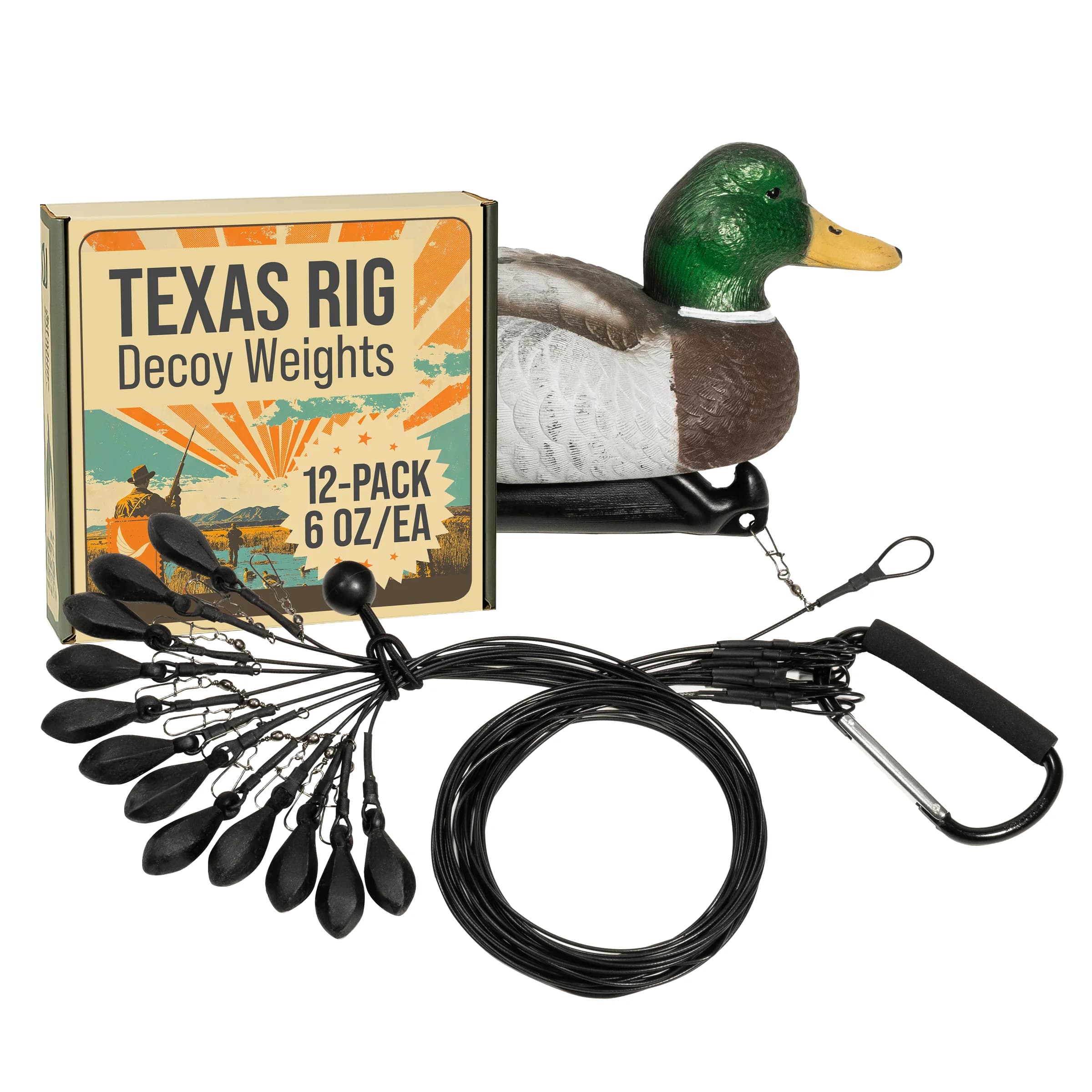
The Lirben 6 oz 12-pack provides 48-inch PVC-coated steel lines, individual anchors, stainless swivels, aluminum crimps and carrying accessories. Its official product media shows a small keel snap/swivel separately from the large carrying carabiner.
Those visible parts and dimensions do not, by themselves, establish every internal travel limit or moving arrangement. Match the actual supplied assembly to its instructions. If the mechanism is unclear, contact Lirben with the product details and photographs before changing it.
Common questions
Should every swivel slide along the line?
No. A swivel may rotate while its position remains fixed. Identify whether the maker intends that specific fitting to travel. A component's name does not establish its complete mounting method.
Can I convert a fixed-weight rig to a sliding-weight one?
That changes the design, line path and connections. Use an approved complete design with compatible parts and tools, or select a finished rig made for the intended arrangement. The DIY versus pre-rigged guide covers that planning decision.
Should I cut off a stopper that catches debris?
Do not remove a design component by guesswork. Clear the recovered rig, inspect its condition and use the maker's supported remedy. Changing the stop can change travel and the way the rig handles.
Sources and limits
The linked Ducks Unlimited and HEYDAY sources provide specific mechanism examples. This guide compares functions and identification checks. It does not rank products from a field trial, approve replacement components or infer a brand's exact mechanism from an illustrative image.
For your next setup
Lirben Texas Rig Decoy Weights - 6 oz (12-Pack)
Twelve individual rigs. Choose the fit for your water.